

PRINCIPAL INVESTIGATORS
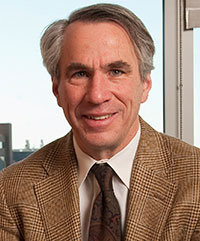
Robert F. Siliciano, MD, PhD
Email: [email protected]
Robert Siliciano is a Professor of Medicine at the Johns Hopkins University School of Medicine. He is an immunologist and virologist recognized for his work on the treatment of HIV infection. He is known particularly for identifying and characterizing the latent reservoir for HIV in resting CD4+ T cells. This reservoir is the major barrier to curing HIV infection and the subject of an intense international research effort. Siliciano was born in Rochester, New York and grew up in Elmira, New York. He graduated from Princeton University with a degree in chemistry and then received an MD and a PhD in immunology from the Johns Hopkins University School of Medicine. After a postdoctoral fellowship in immunology at Harvard Medical School, he joined the faculty of the Johns Hopkins University School of Medicine in 1988. He has been a member of the Howard Hughes Medical Institute since 2002 and has been elected to the National Academy of Medicine, the National Academy of Sciences, and the American Academy of Arts and Sciences. For 16 years, he directed the Hopkins MD-PhD Program at Johns Hopkins.
Janet D. Siliciano, PhD

Email: [email protected]
Dr. Janet Siliciano is a Professor of Medicine in the Division of Infectious Diseases in the Department of Medicine at the Johns Hopkins University School of Medicine. She did her undergraduate work at the University of New Hampshire and received a PhD in Biochemistry from the Johns Hopkins University School of Medicine. She then did postdoctoral work at Harvard Medical School and a second postdoctoral fellowship at Johns Hopkins during which she discovered the tyrosine kinase Itk. As a junior faculty member at Johns Hopkins, she did pioneering studies on the regulation of p53. Janet then joined the HIV research laboratory of Robert Siliciano where she directed the longitudinal study that first demonstrated the long-term stability of the latent reservoir for HIV. This work established that eradication of HIV-1 with antiretroviral therapy alone would not be possible and led to a major change in treatment strategy. She also led the first study to define where in the human genome HIV integrates in infected individuals, work that led to a revision in thinking about mechanisms of latency. Much of her work has focused on cellular and molecular assays to detect and quantify latently infected cells. She led the study which showed that widely used PCR-based measures of the reservoir greatly overestimate the size of the latent reservoir because most proviruses are defective. Together with Greg Laird, she developed a more accurate method of measuring the HIV-1 reservoir, the Intact Proviral DNA Assay (IPDA), which uses a digital droplet PCR to separately quantitate intact and defective proviruses. In addition, she has worked with her Hopkins colleague Francesco Simonetti on the proliferation of latently infected cells, which is now understood to be a major factor in the stability of the latent reservoir. Janet also led the study showing that autologous neutralizing antibodies block outgrowth of a substantial fraction of reservoir viruses, an optimistic finding that suggests that immune control of reservoir virus may eventually be possible. Most recently, she led a study of the reservoir in people who have been on ART for over 20 years. This study showed that the reservoir may actually be increasing with time due to infected cell proliferation, emphasizing again that this reservoir is the major barrier to cure. Janet is currently developing strategies to prevent virus from coming out the reservoir so that people with HIV will not have to take antiretroviral therapy for the rest of their lives. Throughout her research career, she has devoted herself to the training of the next generation of medical scientists through one-on-one mentoring of over 50 PhD students and postdoctoral fellows.